

Faculty Advisor(s)
John P. Morgan
Files
Download Poster (566 KB)
Abstract
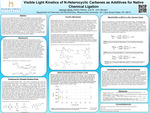
Spectroscopic data have been obtained demonstrating that N-heterocyclic carbenes are effective catalysts for linking shorter peptides to form longer ones, a reaction known as “native chemical ligation” (NCL). This reaction is key to the preparation of GLP-1 agonists, such as Zepbound®, Ozempic®, and Wegovy®, which are currently undergoing an explosion in popularity due to their treatment of diabetes, obesity, and cardiac issues. To assess which catalysts are faster, the kinetics model developed by Raines et al., involving the reaction of N-acetylphenylalanine p-nitrophenylthioester and L-cysteine, is being utilized. This published model allows for easy monitoring of the rate of reaction for NCL catalysts by observing the change in absorption of indigo light by the product, p-nitrothiophenolate, using a UV/Visible spectrophotometer as the reaction proceeds. We proposed that our NHC catalysts would outperform MPAA in these rate measurements. N-heterocyclic carbenes additionally offer an attractive alternative to MPAA because they are potentially more reactive, even in water. The development of better NCL catalysts is therefore of paramount importance as the environmental and economic impacts of these drugs continue to dramatically rise in the short and long term.
Publication Date
8-2026
Document Type
Poster
Department
Chemistry & Biochemistry
Disciplines
Amino Acids, Peptides, and Proteins | Heterocyclic Compounds | Medicinal and Pharmaceutical Chemistry | Medicine and Health Sciences | Organic Chemicals | Other Chemicals and Drugs
Recommended Citation
Werle, Hannah M.; Marley, Kaitlyn S.; and Morgan, John P., "Visible Light Kinetics of N-Heterocyclic Carbenes as Additives for Native Chemical Ligation" (2026). SURF Posters 2026. 4.
https://digitalcommons.misericordia.edu/surf2026/4
Included in
Amino Acids, Peptides, and Proteins Commons, Heterocyclic Compounds Commons, Medicinal and Pharmaceutical Chemistry Commons, Organic Chemicals Commons, Other Chemicals and Drugs Commons