

Explore how Misericordia University OTD students are making meaningful impacts through innovative capstone experiences in real-world settings.
-
Holistic Healing through Horses: An Evaluation of Interdisciplinary Collaboration in Equine-Assisted Services and Associated Pilot Program
Catherine M. Balestrini and Kathleen Hughes-Butcher
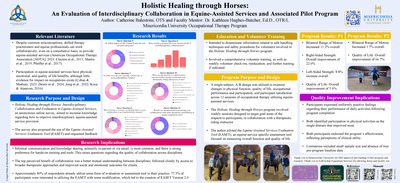
Holistic Healing through Horses: An Evaluation of Interdisciplinary Collaboration in Equine-Assisted Services and Associated Pilot Program was an occupational therapy doctoral capstone project conducted through Misericordia University. This project involved the implementation of equine-assisted services to improve occupational capabilities of physically disabled community-dwelling adults and research related to interdisciplinary collaboration in the equine-assisted service industry. The education component of this capstone disseminated information regarding safe techniques and procedures for volunteers involved in the Holistic Healing through Horses program. The program component of Holistic Healing through Horses involved 12 weekly sessions designed to target goal areas of the respective participants. Progress tracking of occupation-based goals and clinical pathways for skill progression were utilized to design these sessions. Results indicated marked individualized improvements in strength, range of motion, quality of life, occupational performance, and participation. The research component, Holistic Healing through Horses: Interdisciplinary Collaboration and Evaluation in Equine-Assisted Services, an anonymous online survey, aimed to increase knowledge regarding perceived benefits and barriers of equine-assisted service provision in an interdisciplinary context. The survey gathered feedback regarding the use of the novel Equine-Assisted Services Evaluation Tool. Results indicated that there is a lack of clear, structured interdisciplinary collaboration between professionals providing equine-assisted services and desire for hands-on training and structured assessment tools. The Occupation-Based Practice in Equine-Assisted Services manual, a comprehensive guide to encouraging the practice of equine-assisted services, was then developed to encourage service providers to consider and prioritize the daily occupations of respective clients and to encourage future initiatives in this domain.
-
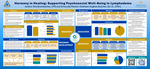
Harmony in Healing: Addressing the Psychosocial Needs of Individuals Living with Lymphedema
Bria K. Brombacher
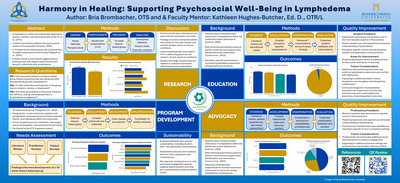
Lymphedema is a chronic and incurable condition associated with significant physical and psychosocial challenges, including depression, anxiety, social isolation, and reduced quality of life. Despite increasing recognition of these concerns, limited interventions exist that specifically address the psychosocial needs of individuals living with lymphedema. Additionally, individuals within this population often report limited provider awareness of lymphedema within the healthcare system. The purpose of this doctoral capstone project, Harmony in Healing: Addressing the Psychosocial Needs of Individuals Living with Lymphedema, was to promote well-being, improve quality of life, and increase awareness of the psychosocial implications of lymphedema through occupational therapy intervention. The capstone was implemented at Hodi Lymphatic Center, a specialized outpatient lymphedema clinic in Northeastern Pennsylvania. The project incorporated four areas of focus: program development, research, education, and advocacy. Program development involved implementing a structured leisure-based group for individuals with lymphedema to address psychosocial well-being through meaningful activity engagement and social participation. Research evaluated the psychosocial experiences of individuals with lymphedema and examined the effectiveness of program implementation. Furthermore, educational initiatives provided experiential learning opportunities related to lymphedema for healthcare students, while advocacy efforts focused on increasing awareness and improving knowledge among rehabilitation practitioners. Needs assessment findings identified significant psychosocial challenges within this population, as well as significant knowledge gaps among both future and practicing healthcare providers. Final results suggested that occupation-based, leisure-focused interventions, combined with practitioner education and advocacy efforts, may support psychosocial well-being, enhance holistic lymphedema care, and promote improved patient outcomes.
-
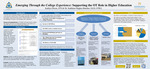
Emerging Through the College Experience: Supporting the Role of Occupational Therapy in Higher Education Institutions
Kaitlyn Dixon
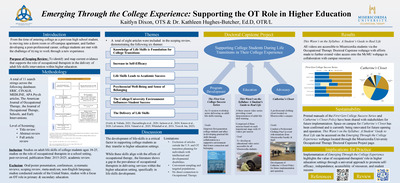
Emerging Through the College Experience was a doctoral capstone project designed to support students during the pivotal transitions of college while substantiating the role of occupational therapy (OT) in higher education. Inspired by the Emerging statues by Dugan located on Misericordia University’s campus, this project focused on developing institutional resources to support college students as they adjust to the college lifestyle. A scoping review was conducted to explore the role of OT in supporting college students with emphasis on adult life skill training. Results from the scoping review identified life skills development as foundational for increasing confidence, academic success, and developing a sense of belonging with influence from the college environment. Utilizing these results, the Emerging Through the College Experience was developed and consisted of three focus areas: program development, education, and advocacy. The First-Gen College Success Series, an 11-session workshop, was designed specifically for first-generation college students and allies to provide hands-on training of life skills. This Wasn’t on the Syllabus: A Student’s Guide to Real Life, a three-season educational video series, provided visual demonstration of adult life skills for on-campus, off-campus, and post-graduation living. Advocacy efforts supported the establishment of Catherine’s Closet, a professional clothing closet on Misericordia’s campus. To support this initiative, two clothing pop-ups events were executed to meet student needs for professional attire and operational policy was developed for Catherine’s Closet. The Emerging Through the College Experience project further supports the role of OT in supporting college students during their pursuit of higher education.
-
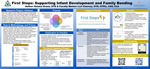
First Steps: Supporting Infant Development and Family Bonding
Katana M. Evans
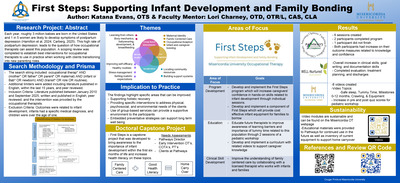
First Steps: Supporting Infant Development and Family Bonding is a capstone project that was developed to bring awareness to the importance of development within the first few months of life, as well as exploring occupational therapy’s role with this population. The project focused on areas of program development, education, and clinical skill development, which were all developed following the completion of a scoping review. Educational materials, including a video library, were created for families to continue to access materials following the completion of the experience. These videos covered topics including safe sleep, milestones, tummy time, and more. Additionally, two sessions of the pediatric workshop series were run to educate occupational therapy students on intervention strategies for working with families transitioning into parenting roles. Individual educational sessions were implemented in partnership with Pathways Pregnancy Center to provide low-income families with evidence-based education on infant care and development. Throughout the process of planning sessions, health literacy principles were considered and applied to all topics to ensure that the material was understandable by the intended audience. Topics included safe sleep, tummy time, milestones, play development, and more. Lastly, the doctoral candidate was mentored by two occupational therapists who work directly with infants and families using a family-centered care model for service delivery. Through this experience, the doctoral candidate was able to refine skills related to cue-based infant care, documentation, goal writing, clinical reasoning, and more.
-
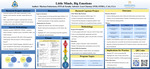
Little Minds, Big Emotions
Marissa Fattorusso
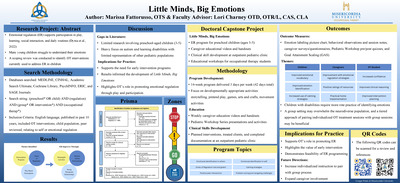
Little Minds, Big Emotions is a doctoral capstone project designed to support the development of emotional regulation skills in preschool-aged children through the areas of program development, education, and clinical skills development. Emotional regulation is an essential component of children' s participation, social interactions, and overall well-being, yet many young children experience difficulties identifying emotions and using effective calming strategies. The purpose of this capstone project was to develop and implement a developmentally appropriate, play-based emotional regulation curriculum for preschool children while also providing educational resources for caregivers. This program was implemented three days a week for 14 weeks at a daycare and included structured group activities focused on emotional identification, self-regulation and calming strategies, positive peer interactions, and problem-solving skills. Educational components of this capstone also included the development of videos and handouts to promote carryover of emotional regulation strategies into the home environment, as well as two presentations delivered through the Pediatric Workshop Series at Misericordia University. Additionally, this capstone included clinical skills development under mentorship at an outpatient pediatric setting, with a strong focus on emotional regulation and interoception. Outcome measures for this capstone included behavioral observations, emotion-labeling, caregiver surveys, pre and posttests, and Goal Attainment Scaling. Findings supported the ability of the capstone to enhance emotional regulation skills in children, increase caregiver confidence, support OT student learning, and increase personal clinical skills. Overall, the project demonstrated the value of occupational therapy in promoting emotional regulation through developmentally appropriate, play-based, and educational interventions across multiple settings.
-
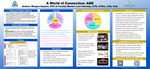
A World of Connection: ASD
Morgan M. Gayton
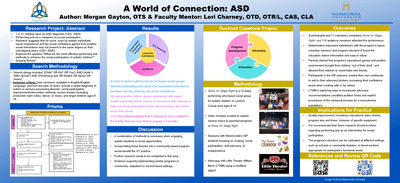
Autism Spectrum Disorder is a diagnosis that affects many school-aged children (CDC, 2025). Autistic children can have more difficulties engaging with both their peers and their families, which can lead to a lack of social participation. A World of Connection: ASD was a doctoral capstone project centering on social participation for autistic youth. The project blended the capstone student’s expanded knowledge in performing arts with their education in Occupational Therapy to create a 4-part capstone experience. A scoping review targeting the question “what are the most effective performing arts methods to enhance the social participation of autistic children” yielded 9 articles meeting all criteria. Key topics in these articles included using theater-based protocols, peer-mentorships, and overall confidence. Results that support a need for programming, which inspired two different programs. “Shine On Stage Right” targeted autistic children and used performing arts to offer social opportunities. This 12-week program offered participants the chance to explore aspects of social participation through performing arts games/activities, all with guidance from student volunteers. An educational video series was designed and provided to parents of this program’s participants to support carry-over learning. “ISP Social Cooking” was a program designed for college-aged students that explored social participation and self-advocacy through cooking and educational sessions. Advocacy was explored through consultative visits to a local community theater organization. The positive results of the capstone experience supported the already existing research. Quality improvement areas for the capstone were found in scheduling, retainment incentives, and increased usage of specialized equipment.
-
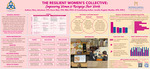
The Resilient Women's Collective: Empowering Women to Recognize Their Worth
Mary Campbell Johnstone
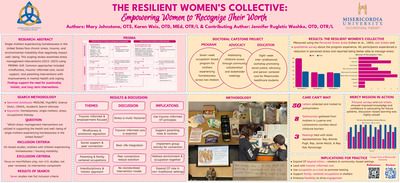
Mothers experiencing homelessness face challenges related to chronic stress, trauma, disrupted routines, and limited access to supportive resources, all of which negatively impact health, well-being, and occupational participation (Anderson et al., 2024). Occupational therapy is uniquely positioned to address these challenges through occupation-based, trauma-informed interventions that promote resilience, empowerment, and engagement in meaningful activities. This doctoral capstone addressed these complex needs through a multifaceted approach that included a scoping review, program development, advocacy, and educational initiatives. A scoping review examined stress-management interventions supporting single mothers experiencing homelessness in the United States. Although positive outcomes were reported, the literature revealed limited evidence supporting holistic, occupation-based interventions, highlighting a need for community-based programming that addresses stress management and meaningful occupational engagement. Guided by these findings, The Resilient Women’s Collective was developed and implemented as a seven-week occupation-based wellness program across two shelters in Luzerne and Lackawanna counties. Grounded in trauma-informed care, the program incorporated meaningful occupations and reflective activities to promote stress management, resilience, and empowerment. An advocacy initiative, Care Can’t Wait, addressed barriers related to childcare accessibility and affordability in Northeastern Pennsylvania. Additionally, collaboration with another doctoral capstone student led to the development of the Mercy Mission in Action workshop series, increasing healthcare students’ understanding of the Sisters of Mercy's Critical Concerns and their application to practice. Collectively, these initiatives demonstrate occupational therapy’s role in program development, advocacy, and education to promote health, well-being, and occupational participation among vulnerable populations.
-
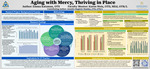
Aging with Mercy, Thriving in Place
Emma Layne Katzman, Karen Weis, and Jennifer Rugletic Washko
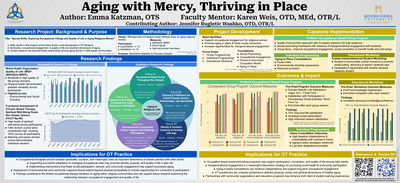
Occupational engagement, spirituality, and quality of life are recognized as important dimensions of aging, however, these factors remain underexplored among older adults residing within faith-based communal living environments. This doctoral capstone experience, Aging with Mercy, Thriving in Place, consisted of two distinct but complementary components: an Institutional Review Board (IRB)-approved mixed methods research study and a quality improvement initiative. The purpose of the research study was to explore occupational engagement, occupational role transitions, spirituality, identity, and perceived quality of life among older adults residing within a faith-based communal living environment. Quantitative data were collected using the World Health Organization Quality of Life- BREF (WHOQOL-BREF) and Functional Assessment of Chronic Illness Therapy-Spiritual Well-Being Scale, Non-Illness Version (FACIT-Sp-NI), while qualitative data was gathered through semi-structured interviews and analyzed using thematic analysis. Findings demonstrated generally high perceived quality of life and spiritual well-being. Qualitative themes revealed that occupational roles evolved rather than disappeared through the aging process, with participants describing meaning in life through service, relationships, spirituality, gratitude, adaptation and continued contribution to community life. Concurrently, a quality improvement initiative was implemented to support occupational engagement, aging in place, and social participation through occupation-based group programming, individualized consultations, and educational workshops. Program outcomes demonstrated positive participant engagement, participation, and satisfaction. Collectively, findings highlight the importance of meaningful participation, spirituality, and community connection in later life while supporting the value of occupation-centered approaches that promote engagement, quality of life, and successful aging. Findings may contribute to the limited literature on aging within faith-based communities and support occupational therapy’s role in addressing spirituality, occupational identity, and meaningful participation in later life.
-
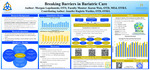
Breaking Barriers in Bariatric Care
Morgan Lapshanski
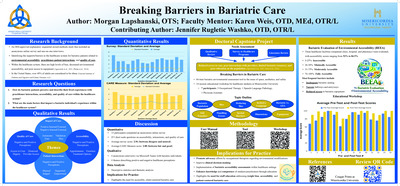
The doctoral capstone project titled Breaking Barriers in Bariatric Care was established to promote equitable care and increase the quality of healthcare services provided to bariatric patients. Breaking Barriers in Bariatric Care was implemented to address the areas of education, research, and advocacy. With the focus being on these areas, the student worked to promote levels of accessibility and inclusivity within the healthcare system. The capstone project included an asynchronous virtual educational program for healthcare students at Misericordia University to enhance knowledge in the areas of bias reduction, safe handling, and providing appropriate care to bariatric patients. The student conducted a mixed-methods study to understand bariatric individuals' experience with provider interactions, access to healthcare-based environments, and the quality of care received. Lastly, the project consisted of an advocacy piece, focusing on the development and implementation of an environmental assessment tool. The assessment tool was utilized to identify the supports and barriers in environmental spaces that impact bariatric individuals' ability to safely and equitably access different healthcare spaces. The bariatric population faces a multitude of barriers when attempting to explore their environment and receive quality care within healthcare systems due to the lack of accessibility, inclusivity, and equity. The project promoted stronger levels of knowledge and competence in the bariatric population while simultaneously promoting advocacy efforts to enhance the accessibility of healthcare spaces and quality of care being received.
-
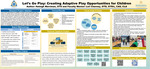
Let's Go Play: Creating Adaptive Play Opportunities for Children
Haleigh J. Merriman
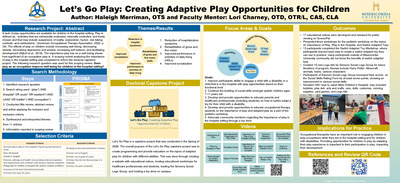
Children experiencing chronic conditions or life-threatening diseases are at a significantly greater risk of having poor mental health, with symptoms including anxiety, depression, aggression, physical impairment, and problems with academics and socialization (Nijhof et al., 2018). The Let’s Go Play project focuses on program development and education to provide children with disabilities opportunities to play. Play is an important occupation that children engage in. Play is a way that children learn new things, including developing resiliency, overcoming challenges, cooperating, and negotiating with others in a social sense. This program includes weekly video modules on hospital play and switch-adapted toys. This includes how to adapt the environment for play, ways to engage in play with precautions, adapting the play activity, and how to create social opportunities, as well as information about the switch adaptation process. This program provides educational materials on how to adapt play for these children so that they can have a positive experience with play during a difficult time. The education component involves providing training to parents, occupational therapists, health care practitioners, and students. This includes in-person sessions on switch-adapted toys. These seminars taught families, occupational therapists, and students how to manually switch adapted toys for children with complex medical needs to make toys more accessible. Switch adapted toys are one option to improve play opportunities for children with medical complexities that require switch adapted toys. Parents say that their children use switch adapted play to engage in both independent play and social play. Teaching more people about switch adapted toys will allow more children to access play. Social play was also in this project addressed during the Sensory Social Lego® Group that the capstone student hosted for autistic children. Play was adapted for the participants by using Legos® to encourage social participation with other children in the group.
-
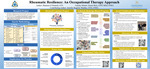
Rheumatic Resilience: An Occupational Therapy Approach
Shannon N. O'Donnell
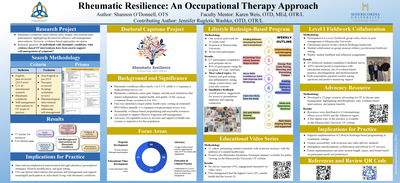
Rheumatic conditions affect nearly one in four adults in the United States (U.S. Department of Health and Human Services, n.d.) and are characterized by chronic, often progressive symptoms, requiring long-term self-management. Despite this need, accessible and non-pharmacological resources remain limited. The capstone project, Rheumatic Resilience: An Occupational Therapy Approach, was developed to address this gap by promoting sustainable symptom management strategies through programming and education, while increasing awareness of occupational therapy (OT)’s role in chronic pain management. This project focused on areas of program development, education, clinical practice, and advocacy. A 10-week, in-person program based on Lifestyle Redesign principles was developed to increase the quality of life of adults with rheumatic conditions. Education was reinforced through a video series aligned with in-person content, expanding access to individuals unable to attend sessions or residing outside Northeastern Pennsylvania (NEPA), and is publicly available on Misericordia University’s website. To support clinical skill development alongside educational experience, the capstone student contributed to creating a Level I fieldwork experience in pain education and management, while also providing instruction to fieldwork students and participants on occupation-based pain management strategies. Advocacy efforts included the development and distribution of an evidence-based resource highlighting the value of OT in chronic pain management to rheumatologists across NEPA. The capstone project supported adults living with rheumatic conditions by providing accessible, evidence-based education and resources while advocating for the unique role of OT in chronic pain management.
-
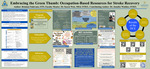
Embracing the Green Thumb: Occupation-Based Resources for Stroke Recovery
Brianna Padovano
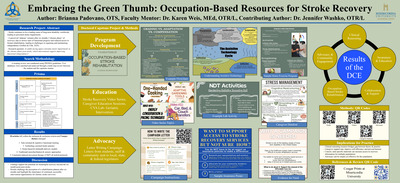
Stroke recovery requires ongoing effort from survivors, caregivers, practitioners, and communities to promote meaningful participation in long-term engagement in daily life. Despite the growing amount of evidence supporting continued recovery beyond the acute stages of stroke, accessible resources that address the needs of these stakeholder groups remain limited (Chen et al., 2019). This doctoral capstone experience aimed to bridge these gaps through the development and dissemination of educational, clinical, and advocacy-based resources designed to support stroke rehabilitation across various stakeholders. An evidence-informed, occupation-based stroke recovery guide, which includes relevant theories, decision-making flowcharts, sample protocols, and resources, was created for new graduate and emerging occupational therapy practitioners entering stroke rehabilitation. Educational materials, such as a stroke-specific video series, caregiver support sessions, and the implementation of a cerebrovascular accident (CVA) based lab, provided various stakeholders with accessible materials to reference in their own contexts. Finally, a letter-writing campaign to the local, state, and federal legislators was implemented to advocate and increase awareness of the comprehensive needs that chronic stroke survivors face. Evaluation measures included participant feedback, confidence assessments, engagement measures, and practitioner surveys across the components of the capstone. Altogether, the findings demonstrate a continued need for accessible resources, caregiver support, practitioner guidance, and advocacy efforts related to stroke rehabilitation. Participants reported overall increased confidence, knowledge, and awareness across multiple project initiatives, emphasizing the value of awareness, knowledge translation, and advocacy to support occupation-based services. The outcomes of this project highlight the potential impact of multidisciplinary resources and community engagement efforts on enhancing support systems for individuals navigating the chronic phase of stroke recovery.
-
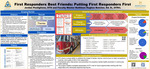
First Responders' Best Friends: A Mental Health and Trauma-Informed Care Program for First Responders
Jordan Postiglione
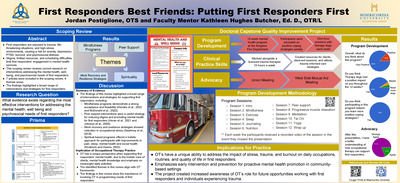
First responders experience consistent exposure to traumatic events in their day-to-day profession, placing them at increased risk for mental health challenges, including stress, burnout, anxiety, depression, and post-traumatic stress disorder. The First Responder’s Best Friends doctoral capstone quality improvement project aimed to increase mental health and well-being in first responders as well as to bring awareness to the importance of mental health and the impact of trauma. The capstone project consisted of three different areas of focus: program development and implementation, advocacy, and clinical practice skills. Program development and implementation was a 12-week mental health program at the Kingston Fire Department, with weekly program sessions to educate on positive coping strategies and mechanisms, with the incorporation of therapy dogs. Advocacy included presentations at local first responder meetings on mental health and occupational therapy’s role when working with first responders. Clinical practice skills involved working alongside a licensed trauma therapist to gain a deeper understanding of trauma and those experiencing trauma, while developing resources for first responders to utilize. To guide the doctoral capstone project, a scoping review was conducted to examine effective interventions for addressing the mental health, well-being, and psychosocial needs of first responders. The outcomes demonstrated positive engagement and receptiveness from participants, increased discussions regarding mental health, and an increased awareness of coping strategies that can be utilized in their future work. The capstone project highlights the unique role of occupational therapy with first responders and the ability to integrate a preventive mental health program into community-based populations.
-
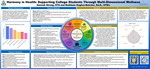
Harmony in Health: Supporting College Students Through Multidimensional Wellness
Hannah Strong
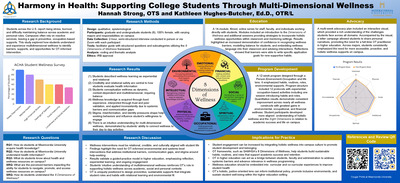
Young adults entering college face a critical developmental transition in which they assume greater responsibility for managing their health and wellness, often without adequate guidance or supportive structures. National data indicate rising rates of mental health concerns, sleep deprivation, and food insecurity among college students, highlighting the need for holistic, context-specific wellness initiatives. The Harmony in Health doctoral capstone project was developed to address this gap by applying occupational therapy’s holistic, occupation-based perspective to promote balance across the Substance Abuse and Mental Health Services Administration’s (SAMHSA) Eight Dimensions of Wellness within the Misericordia University community. The purpose of this capstone was to investigate student wellness needs and implement evidence-informed strategies across four focus areas: research, program development, education, and advocacy. Research involved qualitative, semi-structured interviews exploring how students perceive and engage in wellness-related occupations. Program development centered on creating and piloting a 12-session wellness group designed to build sustainable habits and routines. The educational component produced a 14-module online curriculum for faculty and staff to strengthen wellness literacy and support student success. Advocacy efforts, including a Balance the Backpack simulation and a student-driven letter campaign, elevated awareness of unmet needs and advanced institutional recognition of occupational therapy’s role in higher education. Collectively, Harmony in Health demonstrates the feasibility and impact of embedding occupational therapy within a university setting to enhance student well-being, strengthen campus support systems, and promote sustainable, wellness-focused institutional change.
-
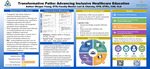
Transformative Paths: Advancing Inclusive Healthcare Education
Morgan Young
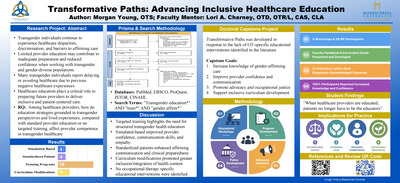
Transgender individuals continue to experience significant healthcare disparities, provider bias, discrimination, and barriers to accessing affirming healthcare services (White Hughto et al., 2015; World Professional Association for Transgender Health [WPATH], 2022). Despite increasing awareness of these disparities, healthcare education often lacks comprehensive training related to gender-affirming care (American Occupational Therapy Association [AOTA], 2021; Office of Disease Prevention and Health Promotion [ODPHP], n.d.; White Hughto et al., 2015). A concurrent scoping review was conducted to answer the research question: Among healthcare providers, how do educational strategies grounded in transgender perspectives and lived experiences affect provider competence in transgender healthcare? The review identified a lack of occupational therapy-specific educational interventions, highlighting a critical gap within healthcare education. Transformative Paths was developed to address this gap through program development, education, advocacy, and policy development. The project included four educational workshops focused on gender identity, healthcare disparities, legal and ethical considerations, stigma and discrimination, and inclusive communication. An interprofessional education event, advocacy initiatives, a letter-writing campaign, and the development of a faculty diversity, equity, and inclusion handbook and curriculum integration guide were implemented to promote systems-level change. Twenty-eight healthcare students participated in the interprofessional education event, and students completed the educational workshop series. Participants reported increased knowledge, awareness, and confidence related to gender-affirming care and inclusive healthcare practices. Advocacy initiatives resulted in the submission of 53 letters to university administration supporting healthcare equity. Faculty resources were developed to support the integration of transgender-inclusive content within occupational therapy education. The findings support the value of structured educational programming in improving provider preparedness and promoting equitable healthcare. This project demonstrates the role of occupational therapy in advancing occupational justice, advocacy, and inclusive healthcare through education and systems-level change.