

Faculty Advisor(s)
Karen Weis, Jennifer Rugletic Washko
Abstract
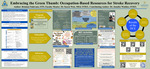
Stroke recovery requires ongoing effort from survivors, caregivers, practitioners, and communities to promote meaningful participation in long-term engagement in daily life. Despite the growing amount of evidence supporting continued recovery beyond the acute stages of stroke, accessible resources that address the needs of these stakeholder groups remain limited (Chen et al., 2019). This doctoral capstone experience aimed to bridge these gaps through the development and dissemination of educational, clinical, and advocacy-based resources designed to support stroke rehabilitation across various stakeholders. An evidence-informed, occupation-based stroke recovery guide, which includes relevant theories, decision-making flowcharts, sample protocols, and resources, was created for new graduate and emerging occupational therapy practitioners entering stroke rehabilitation. Educational materials, such as a stroke-specific video series, caregiver support sessions, and the implementation of a cerebrovascular accident (CVA) based lab, provided various stakeholders with accessible materials to reference in their own contexts. Finally, a letter-writing campaign to the local, state, and federal legislators was implemented to advocate and increase awareness of the comprehensive needs that chronic stroke survivors face. Evaluation measures included participant feedback, confidence assessments, engagement measures, and practitioner surveys across the components of the capstone. Altogether, the findings demonstrate a continued need for accessible resources, caregiver support, practitioner guidance, and advocacy efforts related to stroke rehabilitation. Participants reported overall increased confidence, knowledge, and awareness across multiple project initiatives, emphasizing the value of awareness, knowledge translation, and advocacy to support occupation-based services. The outcomes of this project highlight the potential impact of multidisciplinary resources and community engagement efforts on enhancing support systems for individuals navigating the chronic phase of stroke recovery.
Publication Date
2026
Document Type
Poster
Department
Occupational Therapy
Keywords
chronic stroke, stroke rehabilitation, occupational therapy, clinical reasoning, occupation-based practice
Disciplines
Medicine and Health Sciences | Occupational Therapy | Rehabilitation and Therapy
Creative Commons License

This work is licensed under a Creative Commons Attribution-NonCommercial-No Derivative Works 4.0 International License.
Recommended Citation
Padovano, Brianna, "Embracing the Green Thumb: Occupation-Based Resources for Stroke Recovery" (2026). Entry Level Occupational Therapy Doctoral Capstone Projects Class of 2026. 3.
https://digitalcommons.misericordia.edu/otd_capstone2026/3