

Faculty Advisor(s)
Elaine Halesey
Abstract
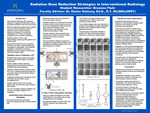
This project explains the importance of radiation dose reduction in Interventional Radiology (IR) and the strategies that help protect both patients and healthcare staff. General factors that influence exposure, challenges associated with extended fluoroscopy times, sources of scatter radiation, and the role of proper training and protective equipment are discussed. IR procedures often involve long imaging times and complex patient anatomy, which can significantly increase radiation dose if not carefully managed. Traditional safety practices such as pulsed fluoroscopy, last image hold, collimation, increased distance, and appropriate shielding are essential in minimizing unnecessary exposure. New advancements, including patient dose management software, Radiation Dose Structured Reports (RDSR), and automated monitoring systems, offer improved opportunities for measuring and controlling dose levels. Emerging technology such as SepConv++ video frame interpolation also shows strong potential by allowing lower fluoroscopic frame rates while maintaining diagnostic image quality. These developments contribute to safer imaging environments and better outcomes for both patients and staff. Continual research, education, and quality assurance highlight the ongoing need to refine dose optimization methods in IR.
Keywords: interventional radiology, fluoroscopy, scatter radiation, collimation, ALARA, artificial intelligence
Publication Date
2025
Document Type
Poster
Department
Medical Imaging
Keywords
interventional radiology, fluoroscopy, scatter radiation
Disciplines
Medicine and Health Sciences
Recommended Citation
Fluhr, Breanna, "Radiation Dose Reduction Strategies in Interventional Radiology" (2025). Medical Imaging Senior Posters. 56.
https://digitalcommons.misericordia.edu/medimg_seniorposters/56