

Faculty Advisor(s)
Lynn Blazaskie
Files
Download Full Text (648 KB)
Abstract
Abstract
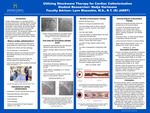
This project explores the role of cardiac catheterization and the use of intravascular shockwave therapy (IVL) in diagnosing and treating coronary artery disease (CAD). Cardiac catheterization is a minimally invasive procedure that allows doctors to visualize coronary and peripheral vessels, assess heart function, and intervene on obstructed arteries. The poster outlines the fundamental steps of catheterization, including the use of specialized catheters, contrast imaging, and tools such as balloons and stents to restore blood flow. The main topic of this project is Shockwave therapy, a newer technique designed to treat heavily calcified lesions that are resistant to other methods, such as atherectomy. Interventional shockwave therapy (IVL) uses high-frequency ultrasonic waves to disrupt calcium within the vessel wall while increasing lumen area, allowing for safer and more effective stent deployment. This project highlights the benefits of shockwave therapy like minimal vessel injury, improved procedural outcomes, and enhanced safety for high-risk patients. Limitations such as device failure, limited long-term research, and rare complications are also addressed. Successful outcomes from recent studies demonstrate promising results, including improved lumen size and reduced restenosis rates. Overall, this project emphasizes how advanced cardiac catheterization procedures, like interventional shockwave lithotripsy (IVL), are reshaping cardiac catheterization and improving treatment options for patients with complex coronary artery disease (CAD).
Keywords: cardiac, catheterization, therapy, coronary artery disease, catheter, Shockwave
Publication Date
2025
Document Type
Poster
Department
Medical Imaging
Keywords
cardiac catheterization, catheter, shockwave therapy
Disciplines
Medicine and Health Sciences
Recommended Citation
Hartmann, Nadja E., "Utilizing Shockwave Therapy for Cardiac Catheterization" (2025). Medical Imaging Senior Posters. 64.
https://digitalcommons.misericordia.edu/medimg_seniorposters/64