

Faculty Advisor(s)
Lynn Blazaskie
Abstract
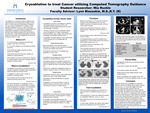
This research examines the effectiveness of cryoablation, a minimally invasive treatment for tumor destruction. Cryoablation works by using freezing temperatures to the targeted tissues, leading to cell damage and eventually cell death. It is being utilized more frequently to treat various cancers, such as: liver, lung, breast, renal, and prostate. This research analyzes current literature and experimental findings to evaluate how cryoablation contributes to improved treatment outcomes and reduced damage to surrounding healthy tissues. Cryoablation offers several advantages over traditional treatment options including, reduced recovery time, lower complication rates, and the ability to precisely target tumors. Imaging guidance through computed tomography during the procedure allows for accurate monitoring and control of the treatment area. The results suggest that cryoablation is an effective alternative for surgery, chemotherapy, and radiation therapy. These findings highlight the growing role of cryoablation in modern oncology. Future research should focus on long-term patient outcomes and continued advancements in imaging and procedural techniques to further improve the safety and effectiveness of cryoablation.
Publication Date
2026
Document Type
Poster
Department
Medical Imaging
Keywords
cryoablation, minimally invasive treatment, liver cancer, lung cancer, breast cancer, prostate cancer, renal cancer, imaging guidance
Disciplines
Medicine and Health Sciences
Recommended Citation
Ruckle, Mia D., "Cryoablation to Treat Cancer Utilizing Computed Tomography Guidance" (2026). Student Research Poster Presentations 2026. 12.
https://digitalcommons.misericordia.edu/research_posters2026/12