

Faculty Advisor(s)
Loraine Zelna
Files
Download Full Text (2.9 MB)
Abstract
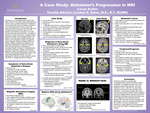
Alzheimer’s is a neurodegenerative disorder that affects millions of Americans. Many individuals know a person who is currently suffering from Alzheimer’s or has lost their life due to the disease. Alzheimer’s can be described as early-onset or late-onset. Early-onset Alzheimer's occurs before the age of 65, and late-onset occurs after the age of 65. This research demonstrates a case study of a 63 year old male with early-onset Alzheimer’s. Symptoms of Alzheimer’s include memory loss, cognitive decline, behavioral changes, and language problems. The patient in this case study’s symptoms began with memory loss and began to regress into cognitive decline. Magnetic resonance imaging (MRI) is an effective imaging modality for the diagnosis and progression assessment of Alzheimer’s disease. MRI is the gold standard in evaluating the neurological system. Changes in the hippocampus are linked to Alzheimer’s disease. MRI provides diagnostic images of the hippocampus of the brain. Thereby, demonstrating pathological changes in the brain making diagnosis possible. This case highlights the importance of early diagnosis and the role of MRI in managing Alzheimer’s disease.
Publication Date
2025
Document Type
Poster
Department
Medical Imaging
Keywords
Alzheimer's, early-onset, MRI, magnetic resonance imaging
Disciplines
Medicine and Health Sciences | Neurosciences
Recommended Citation
Sorber, Lacey E., "A Case Study: Alzheimer’s Progression in MRI" (2025). Medical Imaging Senior Posters. 60.
https://digitalcommons.misericordia.edu/medimg_seniorposters/60