

Faculty Advisor(s)
Elaine Halesey
Files
Abstract
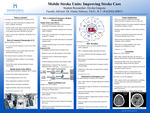
This project examines the role of Mobile Stroke Units (MSUs) in improving stroke diagnosis and treatment time in emergency care. Strokes occur when blood flow to the brain is interrupted, requiring rapid evaluation to reduce brain damage and improve patient outcomes. This study focuses on how MSUs, which are specialized ambulances equipped with computed tomography (CT) scanners and trained medical personnel, allow imaging and clinical decision-making to occur before hospital arrival. The project highlights the importance of CT imaging in quickly identifying stroke type, including ischemic and hemorrhagic strokes, which directly impacts treatment selection. MSU workflow allows for faster diagnosis, real-time neurologist consultation, and earlier treatment initiation compared to standard emergency medical services (EMS), where imaging and decisions are delayed until hospital arrival. Findings suggest that MSUs significantly reduce treatment delays, improve coordination between healthcare providers, and support better patient outcomes by limiting brain tissue damage. This research also identifies future implications, including expanded use of MSUs in rural areas, advancements in telemedicine, and continued improvements in emergency stroke care systems. Overall, MSUs represent an important advancement in prehospital care by shifting stroke treatment earlier in the care process.
Publication Date
2026
Document Type
Poster
Department
Medical Imaging
Keywords
mobile stroke units, stroke care, computed tomography, emergency medical services, prehospital imaging
Disciplines
Medicine and Health Sciences
Recommended Citation
Gargone, Alysha, "Mobile Stroke Units: Improving Stroke Care" (2026). Student Research Poster Presentations 2026. 4.
https://digitalcommons.misericordia.edu/research_posters2026/4