

Faculty Advisor(s)
Loraine Zelna
Files
Abstract
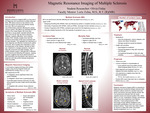
Magnetic resonance imaging (MRI) is a key tool in the diagnosis and monitoring of multiple sclerosis (MS). MRI allows doctors to see lesions in the brain and spinal cord and track disease activity over time. MS is an autoimmune neuroinflammatory disorder affecting the central nervous system. MS affects an estimated 900,000 people in the United States. MS most often develops in young adults, typically between the ages of 20 and 30. MS can lead to physical disability, cognitive difficulties, and a reduced quality of life. Globally, studies show that the incidence and burden of MS have increased over the past decades. This highlights the importance of early diagnosis and effective monitoring for patient outcomes. MS is treated with medication to slow the progression of the disease, steroids for flare-ups, treatment to manage symptoms, therapy to help with movement and daily activities, and healthy lifestyle support. Although MRI is effective for monitoring and detecting MS plaques, ongoing research suggests that future advancements in MRI techniques and biomarkers may improve early diagnosis and help predict disease progression more accurately.
Publication Date
2026
Document Type
Poster
Department
Medical Imaging
Keywords
magnetic resonance imaging, MRI, multiple sclerosis, MS
Disciplines
Medicine and Health Sciences
Recommended Citation
Finlay, Olivia, "Magnetic Resonance Imaging of Multiple Sclerosis" (2026). Student Research Poster Presentations 2026. 2.
https://digitalcommons.misericordia.edu/research_posters2026/2