

Faculty Advisor(s)
Heather Biehl
Abstract
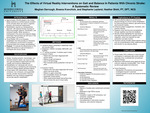
Background: Chronic stroke survivors often experience long-term gait and balance impairments that impact their functional abilities and activities of daily living. Emerging interventions, such as virtual reality (VR), are being evaluated on their potential to enhance rehabilitation outcomes.
Objective: This systematic review aimed to evaluate the effects of virtual reality interventions on gait and balance in individuals with chronic stroke.
Methods: Two literature searches were performed in September 2025 and January 2026 using the CINAHL Complete, MEDLINE, and PubMed databases.
Results: Fourteen studies met the inclusion criteria and were categorized based on balance outcome measures (Berg Balance Scale, Tinetti Performance-Oriented Mobility Assessment, and Timed Up and Go) and gait outcomes (10-Meter Walk Test, 6-Minute Walk Test, Dynamic Gait Index, and gait parameters). Several studies demonstrated statistically significant improvements in both balance and gait compared to conventional rehabilitation. However, variability in the type of VR intervention used was observed, and some studies reported no significant differences in outcomes.
Conclusion: Virtual reality interventions appear to be effective when used in addition to conventional physical therapy for improving balance and gait in individuals with chronic stroke. However, further high-quality research is needed to standardize protocols for virtual reality interventions and determine the effectiveness of different types of VR interventions.
Publication Date
2026
Document Type
Poster
Department
Physical Therapy
Keywords
chronic stroke, virtual reality, gait, balance, physical therapy, rehabilitation
Disciplines
Medicine and Health Sciences | Physical Therapy
Recommended Citation
Darrough, Meghan; Layland, Stephanie; and Kravchick, Breena, "The Effects of Virtual Reality Interventions on Gait and Balance In Patients With Chronic Stroke: A Systematic Review" (2026). Student Research Poster Presentations 2026. 5.
https://digitalcommons.misericordia.edu/research_posters2026/5